Wednesday, May 5, 2021

Upton Sinclair: Muckraker, Social Activist and More!


Muckrakers, who are they?


            In short, Mukrakers are journalists who uncover the truth behind scandals and expose them to the public. The term first coined by President Theodore Roosevelt initially had a negative connotation but now is seen as a badge of honor to journalists who are referred to as muckrakers. Typically the opposers of muckrakers are the ones who have something to hid and don't want people like investigative journalists looking into their wrongdoings. 


            Muckraking came about during the late 1800s early 1900s and was a way that journalists created massive social reform, bringing to light different issues within society. This time period was known as the Progressive Era of Journalism. 

            Muckrakers not only worked to uncover lies and secrets within the political sphere but also within big corporations called Robber Barons in which companies were running monopolies. A huge story of this time was about the Standard Oil company as shown in the photo. But more than exposing lies or scandals, Mukrakers also provided a platform for issues in many different areas like child labor laws, urban poverty, unsafe working conditions, and so much more.


            A prime example of a muckraker during this time is Upton Sinclair. He's a man of many hats but grew to prominence after the release of his book The Jungle in 1906, which shed light on the meatpacking industry. Sinclair's goal for the book was to raise awareness of the poor working conditions, but instead, people grew concerned about the sanitary quality of their meat. As Sinclair later said after his book became well known, "I aimed at the public's heart, and instead
, by accident, I hit it in the stomach." 


            Due to his book, Sinclair got the attention of President Roosevelt, who launched a formal investigation into the meatpacking industry where he found all the claims made in the book to be true. This eventually lead to the Meat Inspection Act of 1906; alongside that, Sinclair is also the reason for the Food and Drug Administration being formed and is why we have so many regulations. It is ironic that his actions greatly impacted the American Publics Safety and well-being for generations to come, even when it was at first by accident. 


            Sinclair was one of many investigative journalists turned muckraker and even social reformer that used writing as a way to spark social change. This kind of work in journalism is always inspiring and something the world could use a little more of today. 


Sources:

https://www.history.com/news/gilded-age-progressive-era-reforms

https://fee.org/articles/witch-hunting-for-robber-barons-the-standard-oil-story/

https://www.youtube.com/watch?v=lIJNjOzowuE&t=246s

Drones, the Future of Journalism Reporting?

            As drones are growing in popularity I began to think about their usefulness in capturing different perspectives and how this is a tool that could be used by Journalists in the near future. The possibilities are endless for being able to report live on events with the quick accessibility of drones. Going forward I can see many news outlets and platforms making use of drones as they easily allow for living streaming breaking stories. Flying a drone will enable them to showcase on air hard to see and reach areas of a conflict whether it be a wildfire, traffic crash, protest, and more. Drones will eventually replace the need for news helicopters as they are smaller and certainly cheaper to maintain, and again, drones can get places a lot easier because of their size. The video above describes some of the other aspects that give journalists an advantage in their reporting when they use drones. It will be interesting to see how the use of drones evolve within journalism, it's definitely something to watch. 


Sources:
https://www.youtube.com/watch?v=nCi49iOzv7M
https://www.fastcompany.com/1835533/why-flying-drones-are-future-journalism
https://www.journaliststoolbox.org/2021/05/01/drones-and-vr-journalism/


Monday, May 3, 2021

EOTO #2- Reflection JOU Heros Jackie Ormes

 During our second EOTO Journalism Hero presentations, I was excited to learn about groundbreaking modern journalists. The presentation that stood out to me most was by my peer Bianca Bullock. She covered the life and work of Jackie Ormes.

Jackie Ormes was the first-ever syndicated black female cartoonist; within her work, she was able to speak out about social justice through her art. Even when the cartoons were sometimes shocking and provocative for the publics' mindset, she didn't let that fear hold her back from using her platform and standing up for what she thought was right. 


In her early years, Ormes got her start through drawing for her high school yearbook, illustrating her peers and teachers. Her first official publication came after sending a letter to the editor of the Pittsburgh Courier, an African-American weekly newspaper. She then was given a job at the paper as a proofreader. Many years later, Ormes made her first comic strip titles "Torchy Brown in Dixie, to Harlem." The cartoon follows a story narrative about a singer. 


The part of the presentation on Jackie Ormes that made me want to write about her is the cartoon below. It conveys a pointed sentence criticizing society for the reason behind the brutal lynching and murder of Emmit Till: whistling. Although in this cartoon, Ormes flips the race and portrays it as if it had been a white person whistling. Not to mention how clever she was in being able to convey all this through a subtle cartoon depicting a kettle. I was very impressed by her forethought and genius to depict this social justice through a simple yet deep cartoon. 


Final Blog: Wars, the Press and the Public

Credit The Daily Star


            The power of the press to influence public opinion is unmatched, and government officials understand that very well. Thinking about the fourth estate and what it means in terms of journalism, it's an idea of journalists working hand in hand with the government, reporting on what government officials want to be reported and how they want that specific story relayed. This, of course, is an inappropriate relationship. The press should stay out of any tight nit relationships they may have with government officials, as doing so leads to biased reporting. It's reasonable and expected for the press to have clear communication with the government as to have a clear understanding of issues at hand, but it gets tricky
when those relationships turn into favoring certain politicians and trying to alter the public's perception of events; rather than just stating the facts "as is" and leaving it up to the public to make up their own minds. A fundamental role of being a journalist is to present the public with "point-blank" knowledge and facts. Due to this, it is increasingly essential what and how the news media reports on the government because what the news sources say influences public opinion, and public opinion turns into how citizens vote and controls who is elected into office. 


            When referencing the term "Watchdog Journalism," it implies a protective oversight that journalists have over the government reporting on any misdemeanors or discrepancies. Journalists in this role essentially check the government and make sure nothing suspicious is going on behind the scenes that the public is unaware of, even when those things are critical, and paint the government in a negative light. The "Watchdog" roles of a journalist are even more critical when it comes to war times as it allows for supervision over government official's actions and how their choices impact the public and the greater world. In recent years, this watchdog role was primarily missing in action during the Bush administration's decision to invade Iraq. Many journalists spoke in favor of the president's choice. They didn't do much to examine the facts or see outside of what he and his administration were projecting, which unfortunately turned out to be primarily false claims and whims.  

            With social media and the ability to receive news within seconds of it occurring growing at alarming rates, journalists are scrutinized more with how they report. Looking at even 20 years ago, when this sensation first started to happen with the Bush Administration, Journalists were under much pressure to write positively and in favor of President Bushes' policies. For historical context, at the time, the United States had just undergone the 2001 September 11th terrorist attacks, which struck a chord with every American. Across the country, the public shared in this incredible level of American patriotism, as everyone came together and commiserated over this horrific tragedy. 


Iraqi Journalist Throws a shoe at Bush in 2008
               Due to this, the Bush Administration was under a high amount of pressure to hold someone accountable for the events of September 11th. So they kept projecting to every news outlet that the person responsible for the attacks was Saddam Hussein which later turn out to be wrong. Unfortunately, no one wanted to go against the administration. Doing so was seen as unpatriotic and therefore unamerican, so primarily, all mainstream media remained supportive of the Bush Administration's claims without looking further or criticizing his decision to go to war. Everyone was too afraid to be chastised or to say something that was unpopular, it is a ruthless, cutthroat environment to live in. During President Bush's second term he was holding a press conference and an Iraqi journalist even threw both his shoes at him saying "
This is a farewell kiss from the Iraqi people, dog" "This is for the widows and orphans and all those killed in Iraq." Today, the Bush Administration remains controversial for his decision to go to war with Iraq.      

            After watching the Bill Moyers special on PBS about the press's behavior during the U.S government's invasion of Iraq, I was shocked. One clip that stood out to me most was when President Bush was holding a press conference discussing the attacks of 9/11, and he reads off a pre-selected list of journalists he was meant to call on in a very scripted manner. It was crazy to see the rapport these journalists seemed to have with him; it was very "buddy-buddy" and accurately showed how swayed in favor most of these journalists were of the Bush administration at the time. It makes me wonder what the publics' position would have been on entering a war with Iraq had the coverage from the press been more objective and neutral. This ties into "today" and how there is this business of news. Publications and broadcast networks only project popular opinions because they are too concerned with ratings and subscribers not out of care for the public but for the money. It's something the news industry should be wary of, and I hope this growing trend stops. We need outlets that report facts, not popular opinion, because it is what everyone wants to hear or read.   

Yellow Journalism & Sensationalism

Credit Movieposters.com

            Prior to taking this course, I had a fundamental understanding of what Yellow Journalism was. Before, I understood Yellow Journalism as false reporting or propaganda and the press exaggerating narratives. But now I know that it goes a little deeper than that, and Yello Journalism can be very pointed and personal in the way it covers stories and almost attacks people. Watching the 1937 film "They Won't Forget" gave an interesting depiction of yellow journalism in relation to how the press interacts in court cases. As we've discussed in class, news outlets are crucial for controlling how the public obtains information and how they grasp it, so journalists need to be unbiased and keep personal opinions or subjective comments out of their writing. However, this was not the case in the movie. 

            The film's plot follows the case of Robert Hale being suspected of an innocent school girl's death. Throughout the film, the viewer can see the reporter's manipulative attitude with the main detective, who is very concerned with finding who is responsible for the murder, not because he wanted justice, but because he was concerned with his reelection bid. He knew his role was hanging in the balance and would be determined by whether or not he prosecuted someone for this crime... even if it were the wrong person. For the reporter, on the other hand, it was all about having access to the information and story first; no matter what the spin was he was relaying, the report just wanted the hot story and to be the first covering it.  The reporter felt a lot of pressure to make the news interesting and inflammatory so that the public would be interested in reading and following his coverage of the trial.

             As we learn at the end of the film, the innocent school teacher from New York, Robert Hales, ends up being lynched and murdered by angry townspeople who have been "drummed up" to do so by the reporting from the press. There's even one scene in court where the reporter makes inflammatory comments about the two mothers, one being Rober Hale's mom, and the other is the mother of the dead girl. The report goes on to exaggerate the facial expression and builds tension and drama further between the two. During high-profile cases like murder trials, what the press covers and how they relay information is crucial as it affects how people react. In this film, there was a clear representation of the journalists falling into sensational yellow journalism, gaslighting public opinion.

            Paralleling to today there have been many murder trials that have drawn similar public attention and sensationalism from journalists. A prime example of a case in recent memory is the trial of Casey Anthony and the coverage by Nancy Grace. 


Thursday, April 22, 2021

EOTO #2- JOU Hero Susan Stamberg

Credit NPR


         Susan Stamberg is a highly respected American Radio Journalist, often referred to and known as "Founding Mother," because she was the first woman to anchor a national nightly news program. Susan has been with 
National Public Radio (NPR) since its founding in 1971, as she is most known for Co-Hosting NPR's show All Things Considered, which she did for 14 years during the years 1972-1986. 


         Prior to her stardom, Stamberg was born and raised in New York City and attended Barnard College, graduating in 1959 with a Bachelor’s Degree. In an interview with Stamberg on Youtube, she explained that a sense of high academic achievement surrounded her while growing up, so she had no choice but to follow suit. Similarly, she explained this academic mindset is what lead her to be so inquisitive and curious of others, leading her to become the great journalist that she is. 


Susan Stamberg age 25 Credit NPR
           In the early days of her career, Stamberg got her start at a local radio station in Washington D.C,
WAMU-FM, an NPR member station. When I was looking for primary source information, I came across a
"My Big Break" series by NPR in which they had interviewed Susan Stamberg, and she explains one of her first radio mishaps. It's a case of someone calling out sick for the weather report, and now it was left for Stamberg to report on. Due to her nerves, she starts rambling that the temperature is 90 degrees with a wind chill of 62 and velocity this and sun rays that, even though it was the middle of February. This instance taught her two significant lessons, never go on air unprepared and never lie to your listeners. 

        
        Most recently, an article by the New York Times titled "The Women of NPR, When NPR Was a Start-Up" outlined Susan and three other women who worked to build NPR and helped bring it to the prominence that it has today. The article also outlined the appeal of NPR; because it was a newly founded non-profit news outlet, many were skeptical about joining and didn't see the potential it had to grow. But the early members, specifically these four women, wanted the opportunity to report on things they had never been allowed to before. "NPR, unlike its well-resourced competitors, was eager to hire sharp, inventive, low-wage workers who couldn’t find jobs anywhere else — in other words, women." NPR opened the door and allowed these women to run with their ideas and report on what they wished without having to publish it to "Women pages." This helped break the gender barrier for women journalists.


Mr. Rodgers and Susan Stamberg

           In the mid-1970s when Stamberg was hitting her stride, she interviewed many well-rounded people, including Laura Bush, Billy Crystal, Rosa Parks, Dave Brubeck, and Luciano Pavarotti. Stamberg grew to fame because of her conversational tone and her ability to ask hard-hitting questions in a way that made people open up. One of her all-time favorite people to interview was Fred Rodgers, better known as Mr. Rogers, who she interviewed on three separate occasions. 


        Today we know Susan Stamberg as a radio journalist veteran who has earned countless accolades. In 1996 she was inducted into the Rdio Hall of Fame. She was also awarded the Armstrong and duPont Award, the Edward R. Murrow Award from the Corporation for Public Broadcasting, the Distinguished Broadcaster Award from the American Women in Radio and Television, and many more. Right before the world shut down last year, in early March of 2020, Susan was also recognized by the Hollywood Walk of Fame, receiving a star embedded in the Hollywood sidewalk among many other red carpet and award-winning celebrities. 


        As someone who aspires to go into broadcast journalism and one day work for NPR it was so beneficial to learn more about Susan Stamberg and the Bible beginnings of National Public Radio. Another fun fact is that Ari Shapiro, a more recent NPR correspondent is her cousin. 


Sources:

https://www.nytimes.com/2021/04/13/books/review/susan-linda-nina-cokie-lisa-napoli.html'
https://www.npr.org/2015/04/18/400466804/the-inauspicious-start-to-susan-stambergs-broadcasting-career
mentions new people coming in
https://www.nytimes.com/1987/03/18/arts/all-things-considered-gets-new-co-hosts.html?searchResultPosition=7
https://www.nytimes.com/1982/05/13/books/now-all-things-considered-is-a-book.html?searchResultPosition=10
https://www.npr.org/people/2101242/susan-stamberg#:~:text=Special%20Correspondent-,Nationally%20renowned%20broadcast%20journalist%20Susan%20Stamberg%20is%20a%20special%20correspondent,the%20Radio%20Hall%20of%20Fame.

https://www.radiohalloffame.com/susan-stamberg

Thursday, April 1, 2021

How did the press treat Jacob Riis during his lifetime?

Credit Wikipedia 

        Jacob Riis was well revered and admired by not only the press but the general public. During his lifetime Riis did much work in social reform through his photojournalism and documentation. Thanks to the new flash camera technology's help, he captured the "unseen" and brought to light the cruel living conditions of the poor in New York City tenements during the late 1800s.
Credit Library of Congress

        Riis grew in prominence after his book How the Other Half Lives was released in 1890. Before this the there wasn't very much recorded or said about him in the papers. When I searched through sources to document the way people perceived Riis while he was alive, I was not surprised that I only was able to find positive remarks. To start my research, I used Gale Primary sources. I looked through the American Historical Periodicals section to gain better insight into what the news media of the day was reporting about Jacob Riis. 

        In a report by The Woman's Journal, Riis was mention in an educational sense, as the article named books and resources for where a particular committee could study a brief overview of social conditions to better understand the ways people were living. 1 (1899, April 8)

        The following newspaper article I found was from Denver News, in a column titled Gossip and Cleanings. The piece was centered around holistic ways of living and how Jacob Riis in his second book A Ten Years War has "has afforded much encouragement to those who hope for better things among the denizens of the city wildness. This column goes on to cite Riis and say "That when schools playgrounds, parks, swimming baths, and gymnasiums are built for the youth of the east side New York, the millennium is near." I found it particularly interesting to read this as it was over 100 years ago but still resonates with current times, we're living in the age of a new millennium, and its disheartening to think we still have some of the same issues pertaining to infrastructure and there are still people living in dire conditions or homeless, which is something Riis had sought to change. 2 (1900, March 24)

Riis & Roosevelt
        Not only did Riis receive good press from the papers, but he even was highly regarded by none other than the current President at the time, Theodore Roosevelt. The two first met during Riis's first job as a crime reporter for NYC, where he frequently worked with the police commissioner, who happened to be Theodore Roosevelt. An article by the Woman's Journal explains a story of a lady meeting with the President, and she describes how she felt as if she already knew him partly through his photo and partly through Jacob Riis. Theodore Roosevelt later said, "Mr. Riis is the finest citizen in New York." 3 (1902, February 22)

        Throughout his lifetime, Jacob Riis did much to improve others' lives. He was a big inspiration for many, and everyone seemed to greatly appreciate his dedication to improving the poor's living conditions. 

Gale Primary sources American Historical periodicals 

Women's Clubs and Club Women. (1899, April 8). The Woman's Journal, 30(14), 106. https://link-gale-com.libproxy.highpoint.edu/apps/doc/VBKTAB890475452/AAHP?u=hpu_main&sid=AAHP&xid=0cca28bd

Denver News. (1900, March 24). Gossip and Gleanings. The Woman's Journal, 31(12), 91. https://link-gale-com.libproxy.highpoint.edu/apps/doc/EUZJZA697835560/AAHP?u=hpu_main&sid=AAHP&xid=4dd87788

A. S. B. (1902, February 22). Washington Notes. The Woman's Journal, 33(8), 60. https://link-gale-com.libproxy.highpoint.edu/apps/doc/UMDPGW267720238/AAHP?u=hpu_main&sid=AAHP&xid=646d0d51

Shaw, H. A. (1903, December 26). Mrs. Shaw Quotes Mr. Jacob Riis. The Woman's Journal, 34(52), 410+. https://link.gale.com/apps/doc/YSCZJR011389255/AAHP?u=hpu_main&sid=AAHP&xid=3a9c13ef

Saturday, March 6, 2021

EOTO- JOU Heros Reflection

    During our EOTO Journalism Hero presentations, I learned so much but the one journalist who caught my attention the most was Horace Greenley.

Credit Wikipedia
    My peer Jake Matthews taught the class about Horace Greenly and I was blown away by both his involvement in journalism and politics. I was a little embarrassed and shocked that I had never known about him before. Greenly began his career by publishing with The New Yorker as pro Whig party with commentary against slavery. In his position, he worked to influence the American public to vote for the Whig party candidate William Henery Harrison who later became the ninth president of the United States thanks to Greenly. 

    As his prominence grew, Greenly decided to start his own paper, The New York Herald. Through his new paper, he began advocating quite progressive thoughts for the time surrounding anti-slavery and working rights for the lower class. 

    Later in his life, Greenly got involved in the political sphere and in 1848 he even obtained a seat in the House of Representatives replacing someone who was unable to finish their term. In his time as a representative Greenly was admired by Abraham Lincoln who was only a district representative at the time. Greenly even served 5 years in congress until 1854 when he left he continued to be a strong support for the abolition of slavery. 

    Greenly also helped found the Republican part and would go on to help Abraham Lincoln get elected although the two had a falling out after Lincoln was president, Greenly began to speak against and criticize him for not being stronger on the abolition of slavery. It was very interesting for me to learn that Greenly is actually one of the main forces speaking out against slavery in such a big way. 


Censorship in the Main Stream Media

Tyler Menezes/flickr


    Censorship in the media isn't a new phenomenon however it is becoming increasingly more apparent and controversial with the rise of "Cancel Culture." Its been defined as "withdrawing support for (canceling) public figures and companies after they have done or said something considered objectionable or offensive" No matter where you stand on the matter it is important to consider at what point is cancel culture and this forced censorship encroaching on the First Amendment. 
    
    As a journalist, I think it is important to hold public figures accountable for their actions and make sure they aren't getting away with doing or saying something offensive, although I think we need to look at who is doing the censorship and canceling and why. Social media has grown and become a large part of society and the way we function in our day-to-day lives, due to this, tech companies who run these platforms have gained a lot of power with the worldwide audience they acquired within the last 10 years. It's worrisome to think that these companies can sometimes control the narrative and pick and choose who's allowed to have a voice. 

    Most recently we can look at the censorship of former President Trump on social media platforms like Twitter. With the unfortunate circumstances of January 6th and the rioting on the Capital, I think it was appropriate to block his access to his account as his tweets were aggravating the situation. Although on the other hand, Trump was not only the President of the U.S. but he is also a world leader and to think that Twitter has more power to censor the sitting president at the time than the government, is for lack for lack of a better term wild.

    As social media continues to run our lives we need to stay vigilant and figure out a way so that its not just four tech companies that hold all this power because it is quickly becoming a monopoly. We also need to understand that there is a difference between accountability and silencing people.

Sources that generated my thoughts:

Top 5 News Sources

Top 5 Places Where I Receive my News:


Source 1- NPR


          As someone whos always on the go in the morning I find listening to NPR is a great way to get an overview of what's happening in the news since I went to bed. It's easy and accessible to listen along to the radio broadcast while I'm in the shower and getting dressed. For people who are busy like me it's a great resource and a conducive, productive way to get your news intake when you wake up. 

Source 2- BBC News


         I love to use BBC as a reference for outside perspective especially when it comes to politics in the United States. I feel that the BBC does a good job of staying unbiased and just giving the facts without any exaggerations. I also use this source as a reference for what's happening globally, some times I find myself caught up in US News and the BBC allows me to understand the things going on throughout the world. 

Source 3-  The New York Times


         Being one of the largest news and media publications across the world, I like to stay connected with The New York Times as it's where a lot of the public receives their news. So staying up to date on TNYT's reporting gives great insight into where the rest of the public gets their information and why they believe what they do based on their news source. I also just see it as a solid place to receive quality reporting.


Source 4-
  Stamford Advocate


         Now that I go to school states away from home, I like to check up on the local news happening in my home area. The Stamford Advocate is the local paper for my hometown, Stamford Connecticut. Instead of having to rely on my parents for the town "gossip," it's nice to be able to read about it in a structured format giving me the ins and outs with all that's going on in my city. 

Source 5-  Social Media


         As a 21st-century college student, Social Media is definitely the fastest way I receive my news, usually through a quick pop-up notification on my phone alerting me to any breaking news right away. The major downside being is that it isn't always accurate, a lot of times I find myself having to double-check headlines or key details and figure out if it's just a tabloid lie or the truth. With digital media growing exponentially, now, more than ever, I feel it’s important to have unbiased journalism presented in the media.

Thursday, March 4, 2021

EOTO Jou Heros- Jaccob Riis

Credit TIME

    
Jaco Riis was a Documentary photojournalist and social reformer during the late 18 hundreds and early 19th century. 

    Before he became a highly regarded journalist he started out as a Danish immigrant who came to America at 21 years old working odd jobs where and when he could. But eventually, he got a job as a journalist at The New York Tribune. His role was being the police reporter working in new york cities high crime districts which is where he first met Theodore Roosevelt who was police commissioner at the time. This friendship between the two would grow and helped Riis's career grow later on. 

Credit Jacob Riis
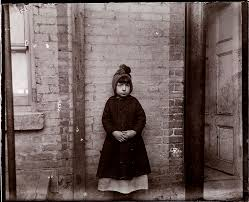
Photo from Riis's image series "How the Other Half Lives"
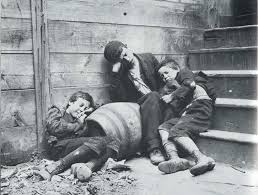
    But he is most known for his 1890 photojournalism series “How the Other Half Lives.” This project visually brought to light the horrible living conditions and crisis affecting people living in New York City Tenements. Those people living there were typically members of the European immigrant community. As he himself was an immigrant he understood the struggles of these people and had once been where they were so he was even more emotionally invested in exposing these issues. Riis was truly a “muckraker” in his time helping those that had been neglected and ignored by the greater public and lawmakers and showcased their struggles and made them known and provided validity in the reports that had already been done. 


Riis understood that seeing is believing and that for the public, it was one thing to hear about the immigrant communities and read about their living situations in newspapers, but to see it and visually conceptualize the struggles made it tangible, so the government and public wouldn't able to refute it and turn a blind eye to the awful living conditions.

Credit Jacob Riis
Photo from Riis's image series "How the Other Half Lives"
Theodore Roosevelt even said Riis had, quote “the great gift of making others see what he saw and feel what he felt."

    Part of what made his work so successful was the advancement of photography. At the time the flash in cameras had just been developed which made it possible for dark- unlit areas to be seen and documented. So had it not been for this improvement in cameras it would not have been possible for Riis to do the work that he did. 

After doing research on Jacob Riis I've concluded that he was more than a reporter or journalist, he was a photojournalist turned activist, turned reformer. 

Wednesday, February 24, 2021

Political Memes


    It was particularly interesting to learn that newspapers used to be specifically partisan and aligned with one political ideology. This comes with its own pros and cons, although I'm not sure that bi partisan papers like what we have now are really accomplishing true non-biased news... even though the platforms say they promote an objective view, each news platform tends to align more conservative or liberal; and that's fine, but I think instead of stating they are non-biased sources, they should just openly come out and say they lean a certain way rather than trying to appeal to everyone because it isn’t working. 

    The system that is "journalism" has become subjectively streamlined into two polar extremes, I can't think of any news platform that is truly bipartisan. Brining the political cartoons into consideration, I think they're a great way of expressing political frustration in a humous and easily understood way. Throughout history, the use of political cartoons has been a great way to inform the general public about what's happening in government in a broken-down way that a general audience can understand without needing to be heavily involved in politics. The way "meme" culture has dominated online social media platforms stems from the foundation of political cartoons. 

    I think objectivity in journalism is great in theory and truly is a news outlet's main goal, but in practice, it's hard to remain unbiased.

Thursday, February 18, 2021

Julian Assange- Confidential Sources


       Julian Assange is an Australian journalist who has been in the public eye and under harsh scrutiny by the American government since 2010 when his site WikiLeaks published a series of confidential American war crimes, and most recently in 2016 when WikiLeaks exposed Hillary Clinton's emails. Due to this, the American government has taken a personal interest in trying to bring Assange to "justice" as they claim he has committed crimes by reporting private U.S War information. The U.S government has been trying to charge him through the Espionage Act.

     To give further context, the Espionage Act was implemented in 1917 by the U.S government in order to silence anti-war voices, the law specifically targeted government employees to keep them from speaking out against the government. Which raises the question, how could a non-U.S citizen who doesn't work for the government be charged through the Espionage Act? This act is particularly controversial as many feel it impedes on the First Amendment protections. 

     In the government's attempt to find a way to prosecute Assange and hold him accountable for what they deem as "wrongdoings," in 2019 Assange was charged with hacking and on 17 different accounts through the Espionage Act. As Assange maintains his innocence, he has had a hard time managing to avoid prosecution as his security is in constant threat. Over the last 10+ years, Assange has relied on seeking asylum from the Educator embassy in Britain. However, after spending years in the embassy, the British government dragged him out, and he is now in the highest security prison where he has been awaiting further legal action. Most recently, his request for bail was denied by the British courts on Jan 6, 2021. At the moment, the British courts do not see enough justification and evidence for Assange to be extradited to the U.S. 
 
     With the changing over in U.S Presidential administrations, Assange has become an even hotter topic. Originally, the Obama administration was the first to raise questions about Assange's legality in releasing sensitive information, but the justice department quickly ruled out that there was no legal way to prosecute him, especially not through the Espionage Act. When Donald Trump initially ran for president, one of the promises he ran on was that he would pardon Julian Assange. That didn't end up happening, and so now with the Biden Administration in office many question what will come of Julian Assange's case. 

     After reviewing Assange and his case I'm torn with whats "right" or "wrong" I can understand why from a government's perspective, they wouldn't want secret information leaked, but at the same time it is the people's government and they have every right to know what is happening. The journalist in me understands Assange created WikiLeaks as an undiplomatic platform to give whistleblowers a voice and site to receive controversial but necessary information. At the end of the day, Assange was just doing his part as a journalist, giving information a platform to be heard and sharing it with the public. If Julian Assange is prosecuted, we should take that as a threat to the First Amendment. 
Sources:
https://www.nbcnews.com/think/opinion/julian-assange-still-prison-america-s-democratic-principles-are-still-ncna1253051
https://www.bbc.com/news/world-11047811
https://www.nytimes.com/2021/01/10/us/politics/assange-trump-pardon.html
https://www.nytimes.com/2021/02/12/us/politics/julian-assange-extradition.html
       

Upton Sinclair: Muckraker, Social Activist and More!

Muckrakers, who are they?                In short, Mukrakers are journalists who uncover the truth behind scandals and expose them to the p...